
Interview with Matt Weinkam
"Toni Morrison connects so many people because they want to talk about her work. She inspires us deeply."

Interview Introduction:
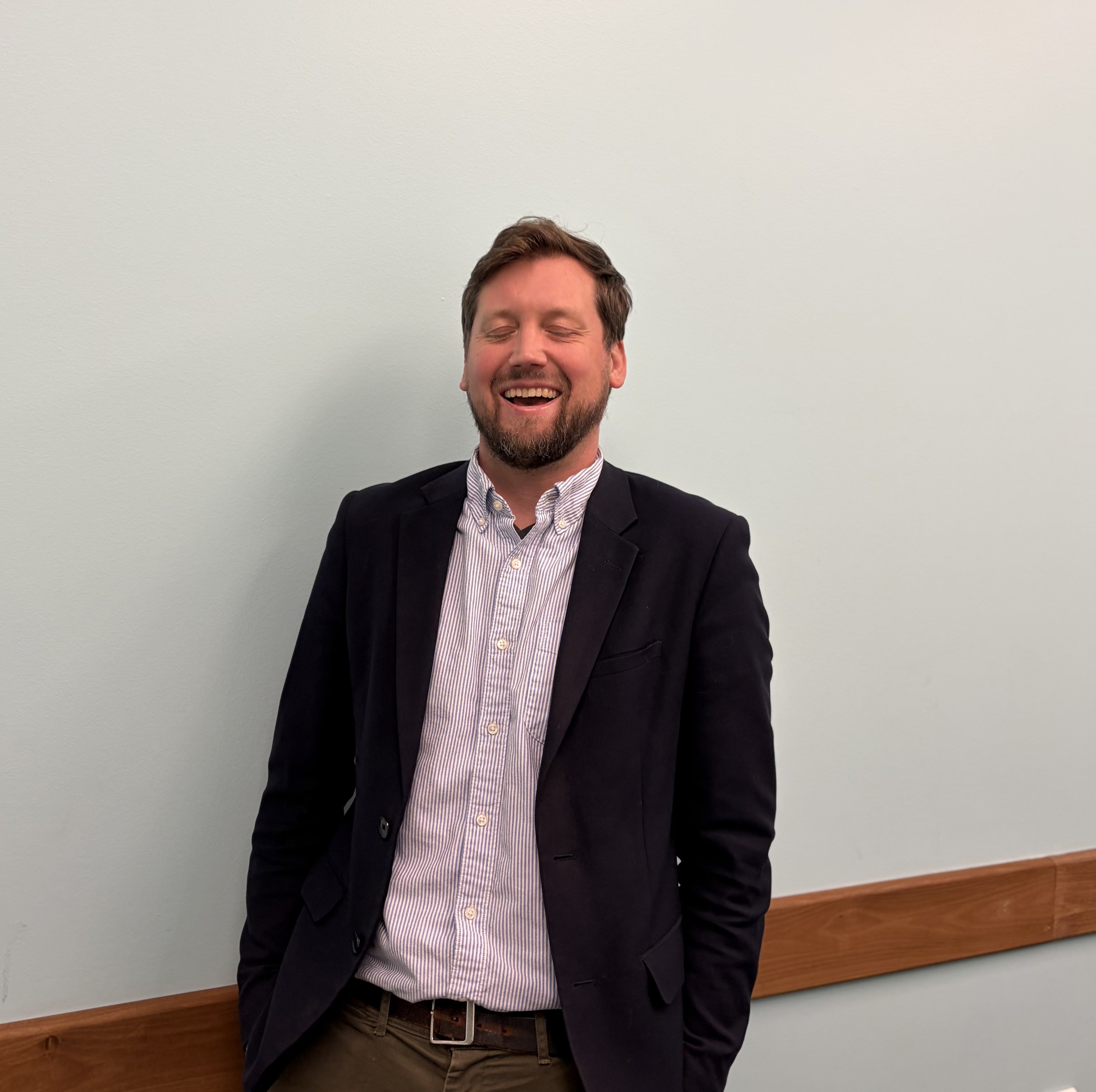
Matt Weinkam is a writer, educator, editor, and executive director of Literary Cleveland, a nonprofit organization and creative writing center that empowers people to explore other voices and discover their own through public workshops, events, and classes. His work has appeared in Denver Quarterly, Sonora Review, New South, HAD, DIAGRAM, Electric Literature, and other publications. He has also helped edit and publish anthologies featuring writing by immigrants, Northeast Ohio veterans, low-income seniors, residents of Cleveland’s Mt. Pleasant neighborhood, and essential workers during the COVID-19 pandemic.
Literary Cleveland leads a variety of regional literary initiatives, including Ohio’s yearlong statewide celebration of Toni Morrison. As part of the celebration, the organization hosts a monthly virtual discussion series devoted to Morrison’s twelve novels, drawing more than one hundred readers from Ohio and beyond. Through these conversations, Weinkam has witnessed Morrison’s enduring power to bring people together to discuss difficult yet important questions about everyday life.
This interview was conducted by Jewon Woo at the Lee Road Branch of Heights Libraries in Cleveland Heights on October 2, 2026.
Tell me who Toni Morrison is to you.
I grew up in Cincinnati and went to graduate school in Michigan. It has been about ten years since I moved to Cleveland. When I first moved back to Ohio, I did not think much about Toni Morrison. But I began listening to all of her novels in audiobooks narrated by Morrison herself, partly because I wanted to feel connected to the place where I was now living, which is only about twenty miles from Lorain.
How did the pandemic reshape your leadership of Literary Cleveland?
I realized that people want to make meaningful connections, especially during a crisis like the COVID-19 pandemic. Writing reflects an essential desire for connection. If Literary Cleveland offers a class, the class itself can become an excuse for people to gather. We talk before and after class, get to know one another, and listen to each other’s stories.
When everything moved online during the pandemic, I thought hard about how we could recreate that kind of environment virtually. I would not say that any one approach worked better than the others. Our instructors, staff, and I tried many different experiments to bring people together and create opportunities for them to learn from one another.
[Interviewer’s note: Literary Cleveland expanded notably in both its class offerings and publications during the pandemic. In reflecting on this experience, Weinkam referred to Toni Morrison’s words: “This is precisely the time when artists go to work. There is no time for despair, no place for self-pity, no need for silence, no room for fear. We speak, we write, we do language. That is how civilizations heal.”]
How did Ohio’s statewide, yearlong celebration of Toni Morrison begin?
At one point, I thought about how amazing it would be to read Toni Morrison together with many people across Ohio. It turned out that I was not the only person who had imagined something like this. Ohio Humanities supported the idea, and I began connecting with more people and organizations interested in collaborating.
Despite the federal funding cuts in 2025, or perhaps partly because of them, people at libraries, universities, bookstores, and other organizations began looking for ways to sustain and support one another with limited resources. Rather than creating entirely new programs, many organizations enriched programs they already had by incorporating Toni Morrison. For example, a library that regularly hosts a book discussion might devote one of those discussions to Morrison.
Eventually, we received funding from two organizations, which was crucial in allowing us to create the celebration website <ohiocelebratestonimorrison.org/> and hire Britt Lovett as the project manager.
[Interviewer’s note: You can read our interview with Britt Lovett here.]
I was surprised by how many people attended the Toni Morrison book discussion. More than 170 people joined the recent discussion of Song of Solomon. What does that tell us about Toni Morrison and her readers?
Part of that turnout was because we had a special guest, Professor and bestselling author Tayari Jones, who recently published Kin. But we usually have around 150 participants each month. Most of them are from Ohio, but also there are many from anywhere in the U.S.
I have learned two things from the book discussion series. First, I think the name “Toni Morrison” works almost like magic because she means so much to so many people. Her work brings people together because they want to talk about it. She inspires people deeply, and as soon as they hear her name, they become eager to gather and respond to one another’s thoughts. Like all great works of art, Morrison’s writing can create opportunities for collective exploration. Strangers can come together, talk about difficult questions, and sometimes even begin to imagine solutions by connecting through her work.
Second, Toni Morrison gives us a way to have difficult conversations meaningfully and with care. Before the book discussions began, the organizers worried about whether people would actually read the books. We wanted the series to encourage people to read Morrison, but we also knew that her novels are not always easy. They deal with difficult subjects, morally complicated characters, nonlinear structures, shifts in time and place, and highly distinctive forms of narration, as in The Bluest Eye. Yet I realized that people still want to read and talk about these books even with strangers they have only just met online.
What would you like people to understand about the statewide celebration?
I do not want people to think that only a few organizations, such as Literary Cleveland, or a handful of individuals made the celebration possible. The event itself may not be groundbreaking, but what deserves attention is the number of people and local groups who care deeply about Toni Morrison such as teachers, librarians, community members, and many others whose names may never appear prominently in the program. They deserve proper credit.
For example, Valerie B. Lee, Professor Emerita of English at The Ohio State University, began teaching Toni Morrison in 1975, when only The Bluest Eye and Sula had been published. She is one of many people who helped generations of readers discover Morrison’s work.
I am aware that, because of systemic racism, African American organizations tend to face greater difficulty securing funding than white-led organizations, especially now. Rather than simply highlighting the “success” of a few public-facing institutions, we need to think carefully about how funding is distributed and actively collaborate with underrepresented organizations so that we do not reproduce existing inequalities. I am envisioning the celebration of Toni Morrison's 100th birthday in 2031 that can demosntrate Black-serving organizations' significance in arts and culture.
In the following video, Weinkam explains his favorite Toni Morrison's book, Beloved (1987).