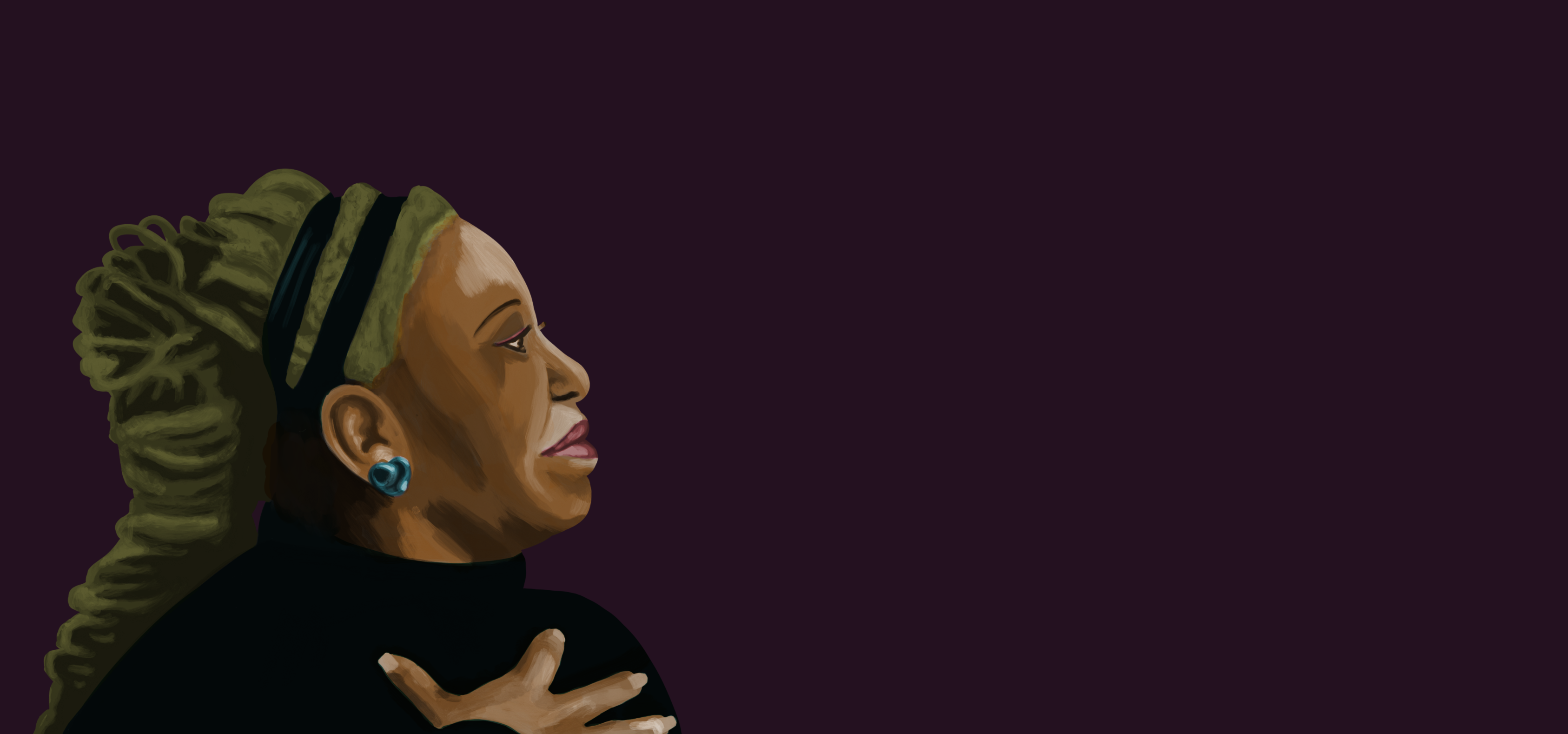
Interview with Makalia Jones
"So I think it’s really big and encouraging for, even the youth of Lorain, everything you need is here."
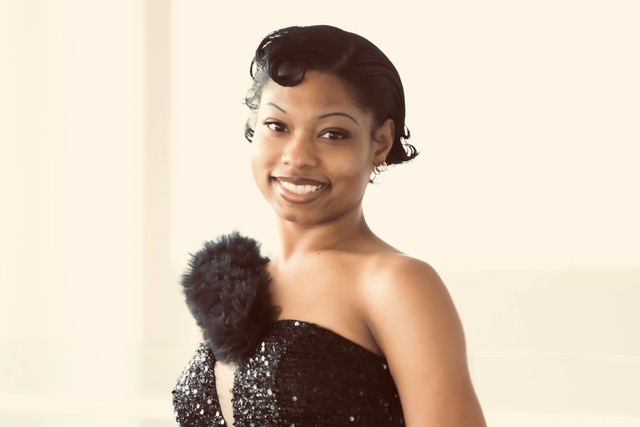
Interview Introduction:
Makalia Jones is a writer from Lorain. She won the first place in the school district for the 2023 Young People's Writing Challenge with a topic on Toni Morrison. This interview was conducted by Arieyauna Capers in August 2026.
Can you introduce yourself and tell me a little bit about your background as a writer?
My name is Makalia Jones. Currently, I am 26. My journey as a writer, in 2023, is when I would officially call myself a writer. Back in 2023 one of my professors had me apply for the Young Peoples Writing Challenge, and it was for Toni Morrison, and they gave quotes from her books and mine was, “if you want to fly you have to give up what weighs you down.“ I took a chance, I didn’t expect it to be super serious, but as a writer, if I’m okay with my art, I can put it out there. I didn’t care if I won or not but I ended up winning the 1st place in the school district. It was really cool, and got featured in the Lorain Public Library Toni Morrison Room. I was also able to go to the State House in Columbus, Ohio and they officially passed the bill, making February 18th officially Toni Morrison Day.
What did winning the award mean to you?
It meant a lot. I think that was the accolade that I wasn’t looking for. You call your talent a hobby until you put it out into the world with intention. So for people to receive my poem the way they did, I was like, “oh my God.” So it kind of just confirmed my voice as a writer, and gave me my niche, and showed what’s important to me, which is community engagement. But it’s also universal. So speaking about adversities that African Americans have struggled with universally. Toni Morrison depicts the Black voice, that is like my main focus, and so kind of gave me my area a writer.
What was it like to have your poem featured in the Toni Morrison Room at the Lorain Public Library?
It was big! Like when you think about Toni Morrison, then you think about little old you, like that’s freaking huge. When you read her books, her voice is so powerful, like you could be reading something and you think like, “Oh my God, I wish I had the courage to say this,” or “I wish I had the courage to say it like this.” When people go into these rooms they see her work, and she’s immortalized through her writing. And then you see your work next to some of her books, and it makes you feel like you’re doing something.
When did you first learn about Toni Morrison, or how’d you encounter her work?
Living in Lorain, I always had run ins with the name “Toni Morrison”. We have a school named after her, and there’s always been books or mentions about her especially during Black History Month. But when I finally got in depth, and got to know who was; was in 2023. It was Brittney Lovett, who was one of the people helping run the community foundation, once I won the award she told me more about Toni Morrison.
How would you say Lorain shaped your view, and understanding for Toni Morrison?
It showed me that I can do and be anything I wanted to be. We hear that a lot but knowing that person is from right down the street, made it real for me.
Would you say that Toni Morrison has created influence towards your writing, or creative process?
Oh yeah. You know, you want to hold back, or sometimes when you’re feeling something, your emotions have no filters. And when you’re writing them and you’re trying to figure out how to put them into words, you’re like, “Why am I holding back my story?” Or things that you may have been like, if I tell this, you’re going to shake up the room. And when you read her books, like, in The Bluest Eye, she talks about one of the girls getting molested. That’s based off of a true story. And a lot of people in Lorain don’t like her for telling that truth.
Has Toni Morrison influenced that kind of stories that you write?
Toni Morrison definitely has influence over the stories that I write. When I was given the prompt, “If you want to fly you have to give up the things that weigh you down.” Writing from that alone, I knew I what I wanted to write, and the voice in which I wanted to write it was, as someone being instructed by the stewardess on an airplane. They check your bags, and all this other stuff. So I was coming from a place of being on a plane and getting to this destination, and the stewardess talking me through it, and what it looks like. So that’s where I came from in my writing. But also when I realized who Toni Morrison is as a person I think it got more in depth and I got more vulnerable in my writing. So she definitely influences what I talk about. Even in my journalism, I love to cover stories about the community, stuff that people don’t talk about, like giving underrepresented voices a voice.
So what role do you think the Toni Morrison Room and the Young Writers Award play in encouraging young writers?
I think it shows them that little girls like us can do big things. Representation matters, when you think about Lorain as a small town, and people think they have to leave Lorain. To quote, Maya Arundado, she told me “People think that they have to leave Lorain to find something big when there are big things in Lorain.” And a lot of people feel like they have to move to become and you really don’t. Everything you need is in your background. Everything you need to become who you are. So I think it’s really big and encouraging for, even the youth of Lorain, everything you need is here. Resources at the Lorain Public Library, what ever you need is right here.
How else did winning the Young Peoples Award affect your confidence?
It showed me that my voice mattered. I was against writers from other more prestigious institutions and my poem came in first place. It didn’t make me feel like I was better, but it made me feel like I actually had a place in this writing world. There’s this analogy of bread, that goes, just because there’s different companies of bread on the shelf doesn’t mean you don’t have to make your bread.
How do you think Morrison’s work speaks to young writers and readers today?
Through her imagery. How she portrays hard topics. And she says it in a way, where she’ll use colloquialisms for something that’s hard and it kind of shows you, you’re not far off. Your experiences are not that far off from what other people are experiencing. It kind of comforts you in a way because it’s like if she got through this or she’s seen this and I’m going through something similar, she’s from where I’m from, so why can’t I overcome it? So it’s really encouraging, it’s empowering.
What do you hope people take away from reading Toni Morrison’s work?
To be fearless. In everything that they do, their endeavors. No matter where they’re at, and wherever they stop. Be fearless people, and be yourself. I think Toni Morrison was unapologetic. Like watching her interviews, she did not conform, she did not shrink no matter what room she was in, even in old age. She never backed up off of her vision and how she’s seen being a writer. And even how we talk, when our Ebonics shows up. She writes how we speak. You give us a language. Our words are not always proper, they’re not always pretty. Our stories are not always pretty. But fearlessly she wrote and told them.
If you could ask Toni Morrison one question, what would it be?
I would ask her, what moments solidified her as a writer, and gave her the courage to publish books. It’s one thing when you’re writing small things, small excerpts, but to write a whole book, what type of courage did you need to decide you’re gonna write a book and continue to do it.